
CATTLEYA ORCHIDS
Cattleya Orchids - The Queen of Collectors
Back in 1818, a British plant lover and horticulturalist, William Cattley rescued an odd-looking plant that had been used as packing material from Brazil. Instead of tossing it aside, he gave it some care. Imagine his surprise when it burst into the most spectacular blooms! That plant became Cattleya labiata, named in his honour, and just like that, orchid history was made.
Fast-forward more than 200 years, and Cattleyas are still stealing the show with their bold colours, ruffled lips, and undeniable presence. From one rescued plant to a worldwide favourite - the ultimate glow-up.
Here in Barbados, Cattleyas feel right at home!
Our steady warmth, bright light, and naturally humid air suit them perfectly, which makes them one of the easier orchids to grow once you understand what they like.
Starting out with Cattleyas can feel intimidating, but the reality is: every expert grower was once a beginner. Think of your journey as a partnership with the plant: you provide the conditions, and the cattleya teaches you patience, observation, and joy.
Mistakes are teachers, not failures: Overwatering, sunburn and pests happen to everyone. Each challenge sharpens your eye and deepens your skill. Enjoy the journey, the reward is unmatched.
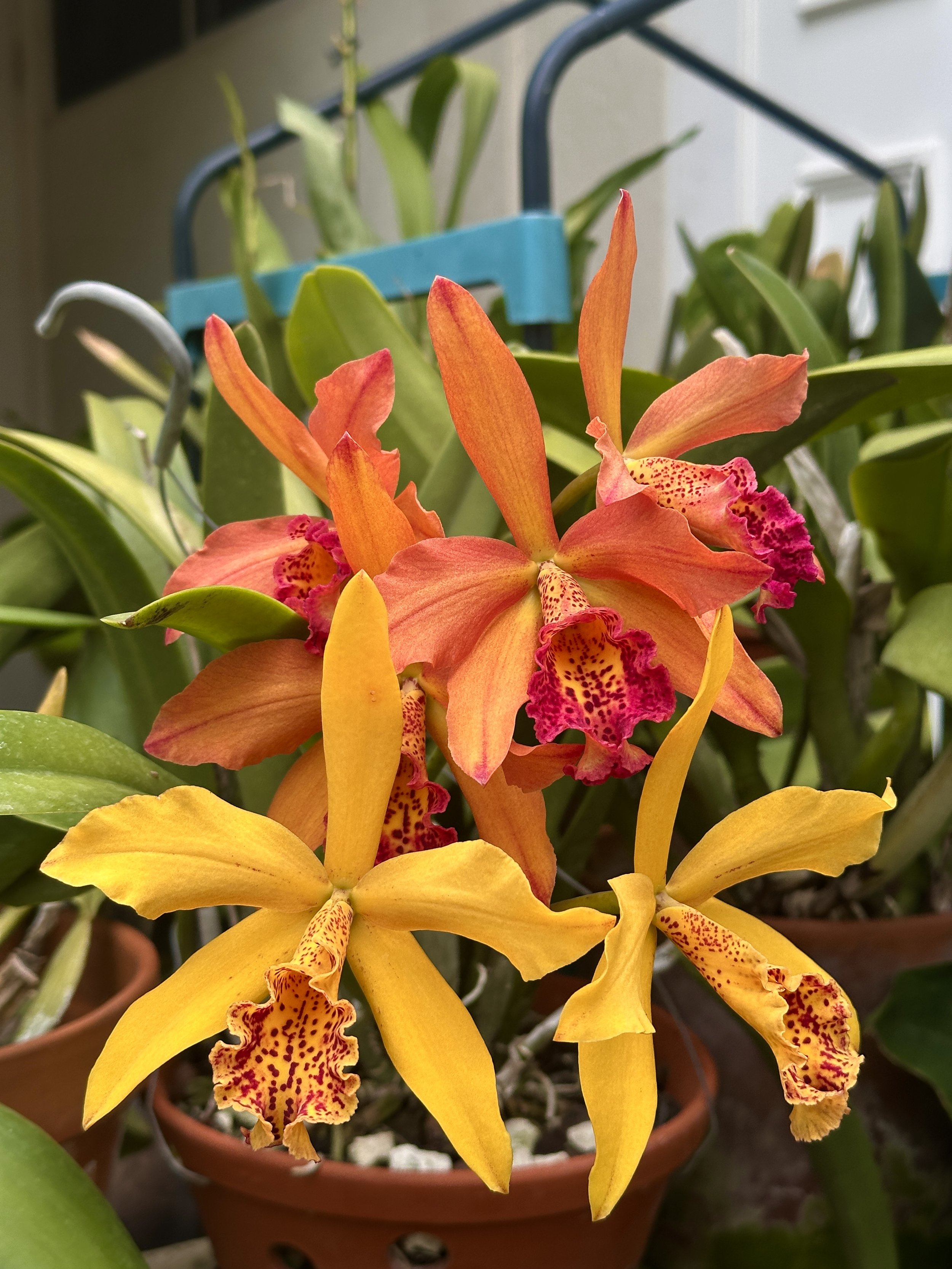
Bright, filtered light is everything for a happy Cattleya. Think sunshine with a little shade—about 55–65% shade is ideal. Too much direct sun will scorch the leaves, so avoid that harsh midday blaze. However without enough light, Cattleyas may not bloom. In general a Cattleya with dark green leaves will not give you flowers. How do we know when our cattleyas are receiving enough light? The new growths should grow straight without staking.
Barbados’ typical warm days and gentle nights fall right in the “Cattleya comfort zone”. They handle heat well as long as there’s good humidity and plenty of airflow. Outdoors is perfect—just shelter them from heavy rain (especially during the rainy season) and intense midday sun.
Cattleyas like a good soak, followed by a dry-out. In our humid climate, roots stay moist longer, so water only when the potting mix is dry and early in the day so they can dry out. Constantly wet roots are a fast track to rot so avoid constantly damp media. Remember, these orchids grow on trees in nature; they are epiphytic. Therefore they expect fast drainage and quick drying.
If you think you need to water a cattleya, water it tomorrow! That is: it is better to underwater than overwater with this kind of orchid. Constantly wet media leads to root rot, dehydration, and eventual plant loss. When in doubt, let it dry a bit more. Remember cattleyas survived those long voyages from the Americas to Europe. They definitely can handle it dry!
Cattleyas are happiest at 50–70% humidity, which our caribbean climates naturally provide. Just pair that humidity with truly constant airflow to keep fungal issues away.
Feed lightly but consistently during active growth. Like most orchids they enjoy feedings weekly weakly: Fertilizer once a week at a half of the strength the package recommends. A balanced orchid fertilizer at reduced strength works well, for example, 20-20-20 at 1/4tsp per gallon or 15-5-15 at ½ tsp per gallon. Flush the pot monthly to prevent salt buildup by watering and letting the water run off.
Blooming
Why won’t my cattleya orchid bloom? The answer is usually one of 2 things:
Your plant is not getting enough light! Strong light is the key to trigger blooms. Cattleyas bloom reliably when they receive enough brightness to maintain that light green - chartreuse leaf color and firm pseudobulbs, but not too much direct sun that can burn the leaves.
It is not the season! Species usually bloom once a year. Some hybrids are seasonal-requiring a change in temperatures- while others can bloom 3 times a year and sometimes more frequently, once established. Research your specific plant so you have realistic expectations!
Immature growths, nutrient imbalance, or stress during bud formation can abort flowers. Cattleyas bloom only from mature pseudobulbs.
It is important to note that NO fertilizer can make an orchid bloom outside of its season. It is not a magic potion but rather a tool to aid in good growth. Understanding whether or not your plant is a species that blooms once a year or a hybrid capable of blooming 4 times a year is crucial to avoiding disappointment. Research your plant!
Cattleyas love to breathe at the roots. They grow beautifully mounted on hardwoods like cedar, guava, cherry, or mango, coconut husk or shell, and freshwater driftwood. Hollow bamboo can also work, especially for smaller plants or bifoliate types that appreciate rapid drying-out.
If you prefer to pot, the most effective potting media for Cattleyas are those that stay airy, fast‑draining, and slightly moisture‑retentive without ever becoming soggy. A classic cattleya mix is coarse bark + charcoal + perlite. Lava rock and LECA ( expanded clay pellets) may also be added for even more drainage. Some growers choose to use LECA or Lava Rock on their own. In these instances , the plant would need to be watered more frequently.
Cattleyas do not like to be disturbed unnecessarily. Repot every 2–3 years, or sooner if the mix starts breaking down. Good drainage is non-negotiable.
Cattleyas fall victim to two common pests, Scale and Thrips. Both of these can be controlled with Orthene, Vertimec, Aval, Actara and Mortel on a rotating schedule.
Warm, humid weather means fungi can show up if airflow is poor. Here are some of the most common fungal headaches:
Black rot (Phytophthora / Pythium)
Shows up as black spotting that spreads extremely quickly. Remove affected tissue immediately, cleaning your tools in between cuts, and improve drainage of the plant and or airflow.Leaf spot (Cercospora, Guignardia)
Small yellow spots that turn brown or purple and slowly expand. These thrive in high humidity with poor air movement. They usually stay cosmetic but can weaken plants if widespread.Mostly cosmetic but can weaken plants if left untreated.Anthracnose
Dark, sunken spots with yellow halos that spread quickly when plants stay wet overnight.Botrytis (on flowers)
Tiny brown speckles on petals, especially in cool, damp weather. It won’t harm the plant, but it spoils the bloom show. Keep buds and flowers as dry as possible to avoid this. Of course, good airflow is extremely important.It’s helpful to keep a small antifungal toolkit on hand, including Captan, Banrot, Kerin, Amistar, Ridomil Gold, Phyton, and Physan.
Contributers:
Michael Waithe & Shari Watson