VANDA ORCHIDS
Suspended in Splendour: The Vanda Orchid
Though vandas contribute the most vibrant kaleidoscope of blooms to the orchid world, their magnificient roots are what comes to mind first and foremost.
They are epiphytic and thus grow bare-root, attaching themselves to trees in nature. In common cultivation, we hang them up and enjoy the jungle vibes their amazing roots offer. Vandas are found throughout the Eastern Hemisphere - notably in Southeast Asia, India .
Vanda orchids are amongst the absolute best orchids to grow in Barbados!
As they are the most sun loving orchids - with some even handling full sun, they can bloom constantly in our environment. Their regal roots make for an enchanting display in your garden even when there are no blooms - something unique to this genus.
Vandas are well worth the effort and do really well in our climate. They will add whimsy to any garden or growing area. Do not be intimidated by the exposed roots, with a little trial and - yes error - these can be some of the easiest orchids to grow. With every blooming cycle, you will be rewarded with bigger and more long-lasting blooms!
TERETE
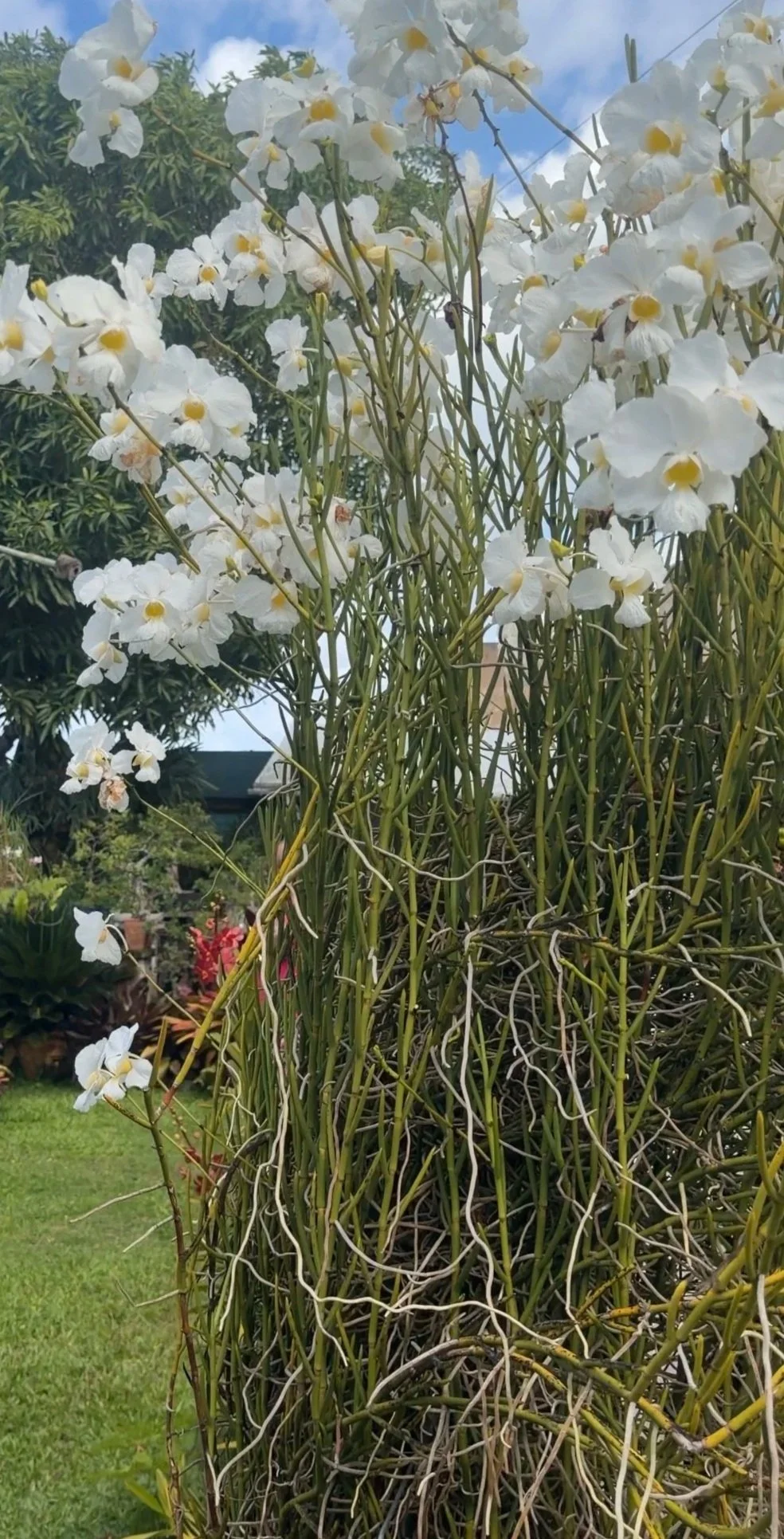
These are vandas with leaves that are cylindrical , usually with a point at the tip, like a pencil. These orchids thrive in the full sun!
TYPES OF VANDAS
SEMITERETE
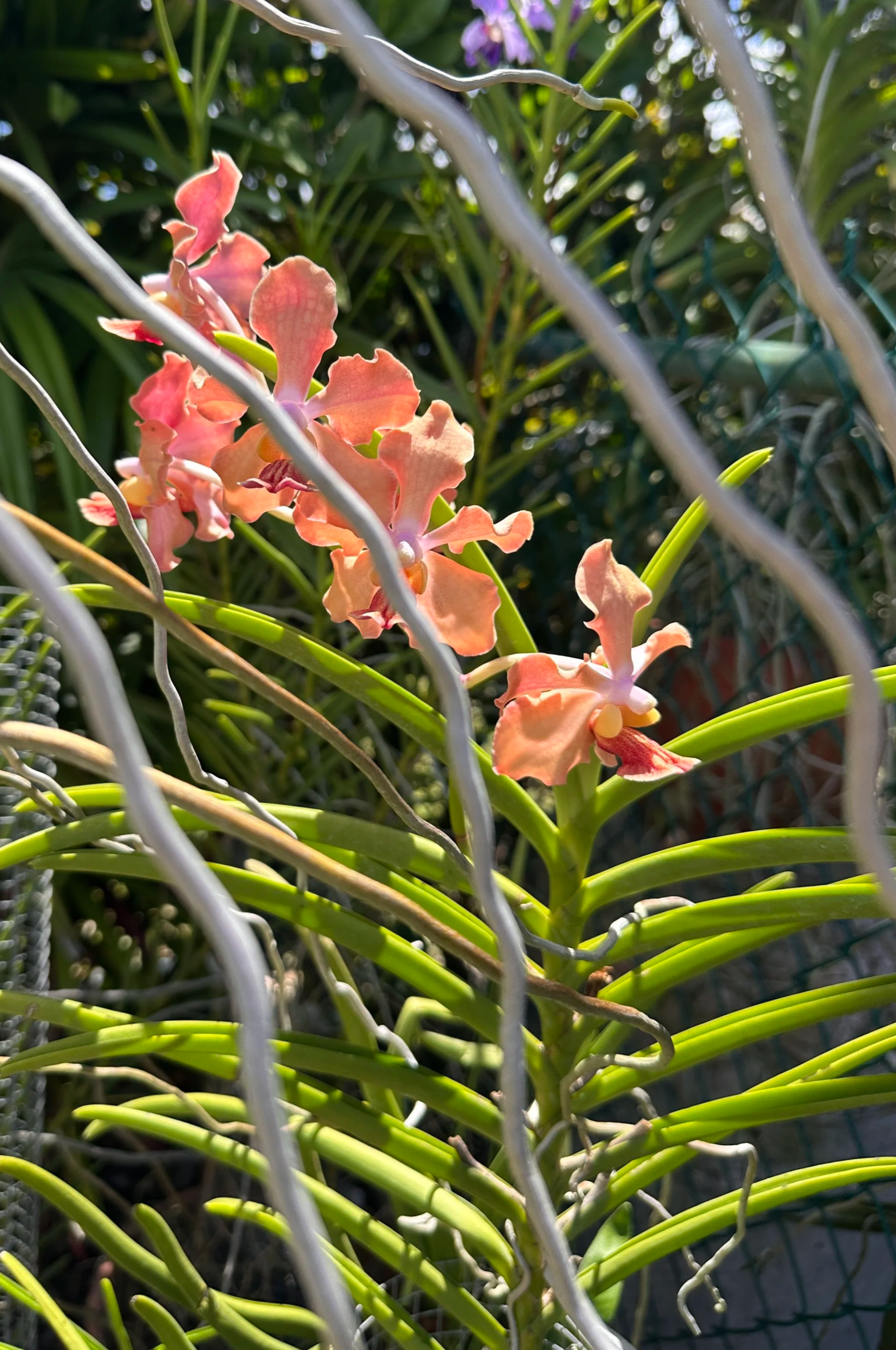
This is a hybrid of strap-leaf & terete leaf. These can handle quite a bit of light and can be acclimated to full sun.
STRAP-LEAF
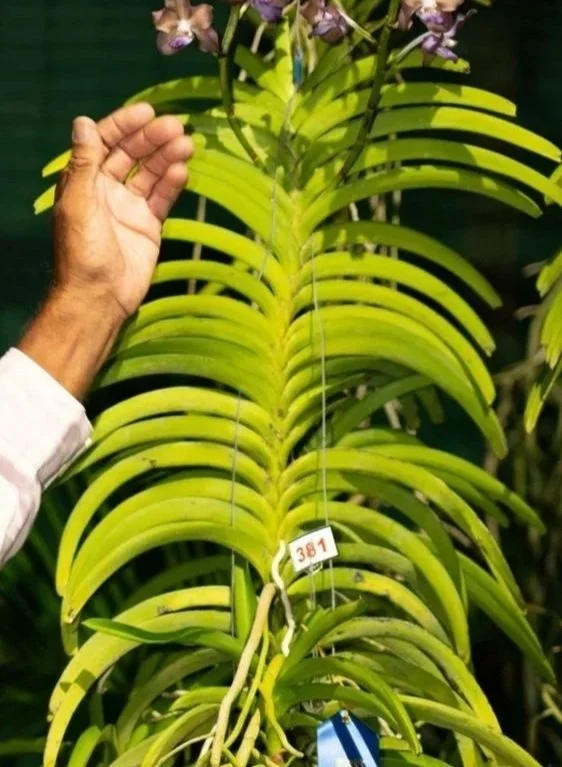
These have broader flatter leaves. Strap-leaf vandas enjoy morning sun and dappled light throughout the rest of the day.
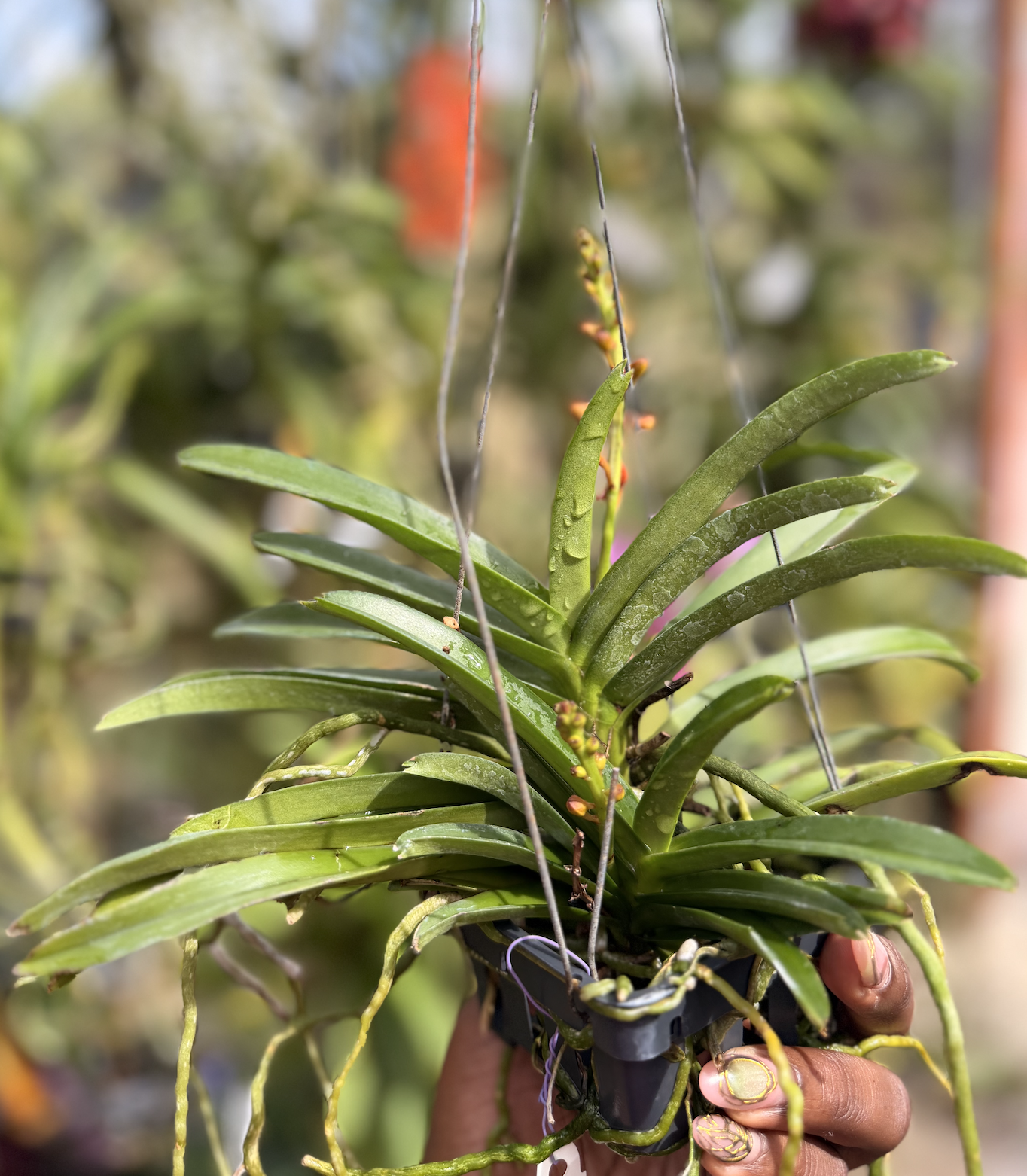
COMPACT
Compact vandas are much smaller and usually have smaller blooms.
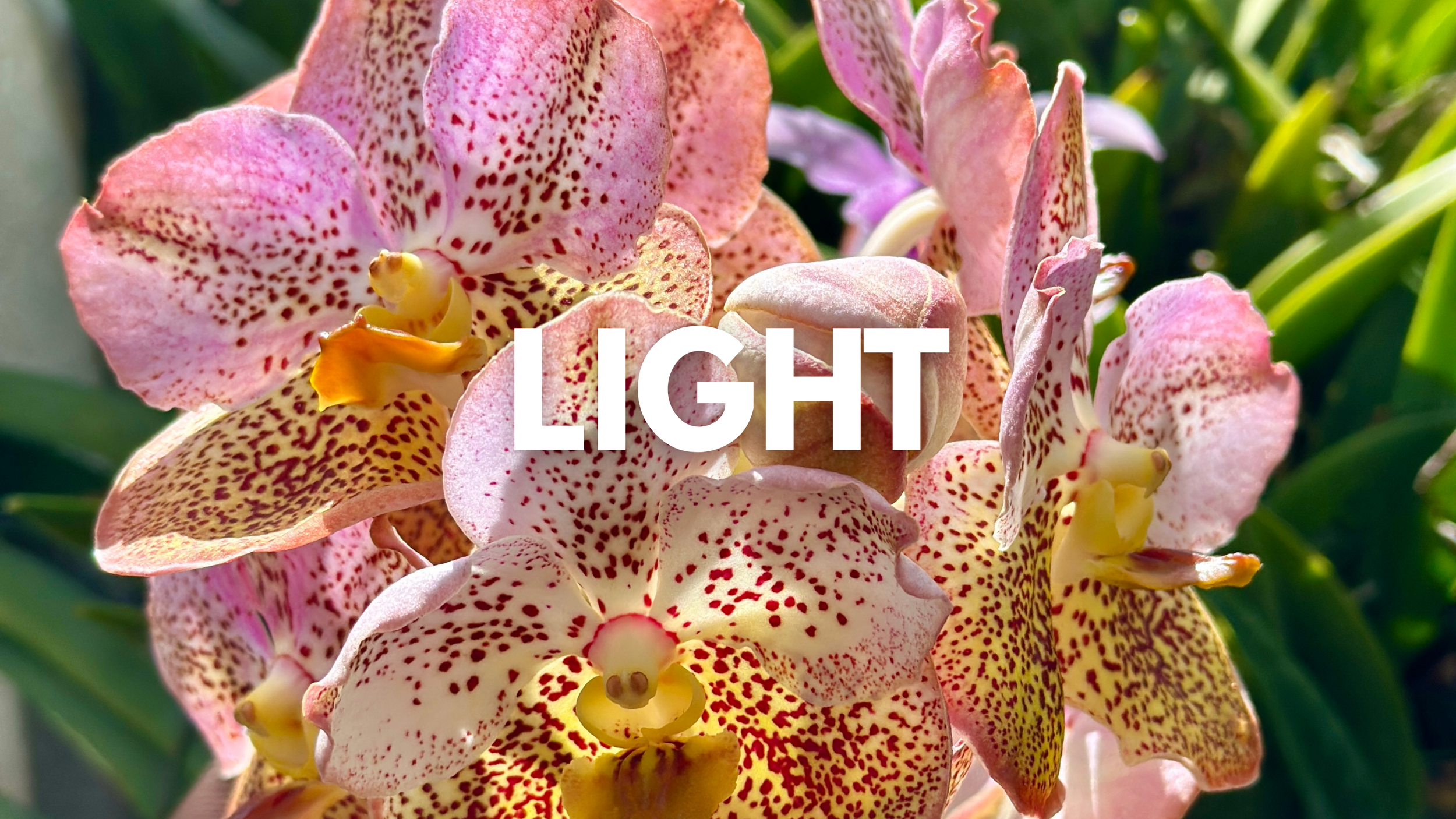
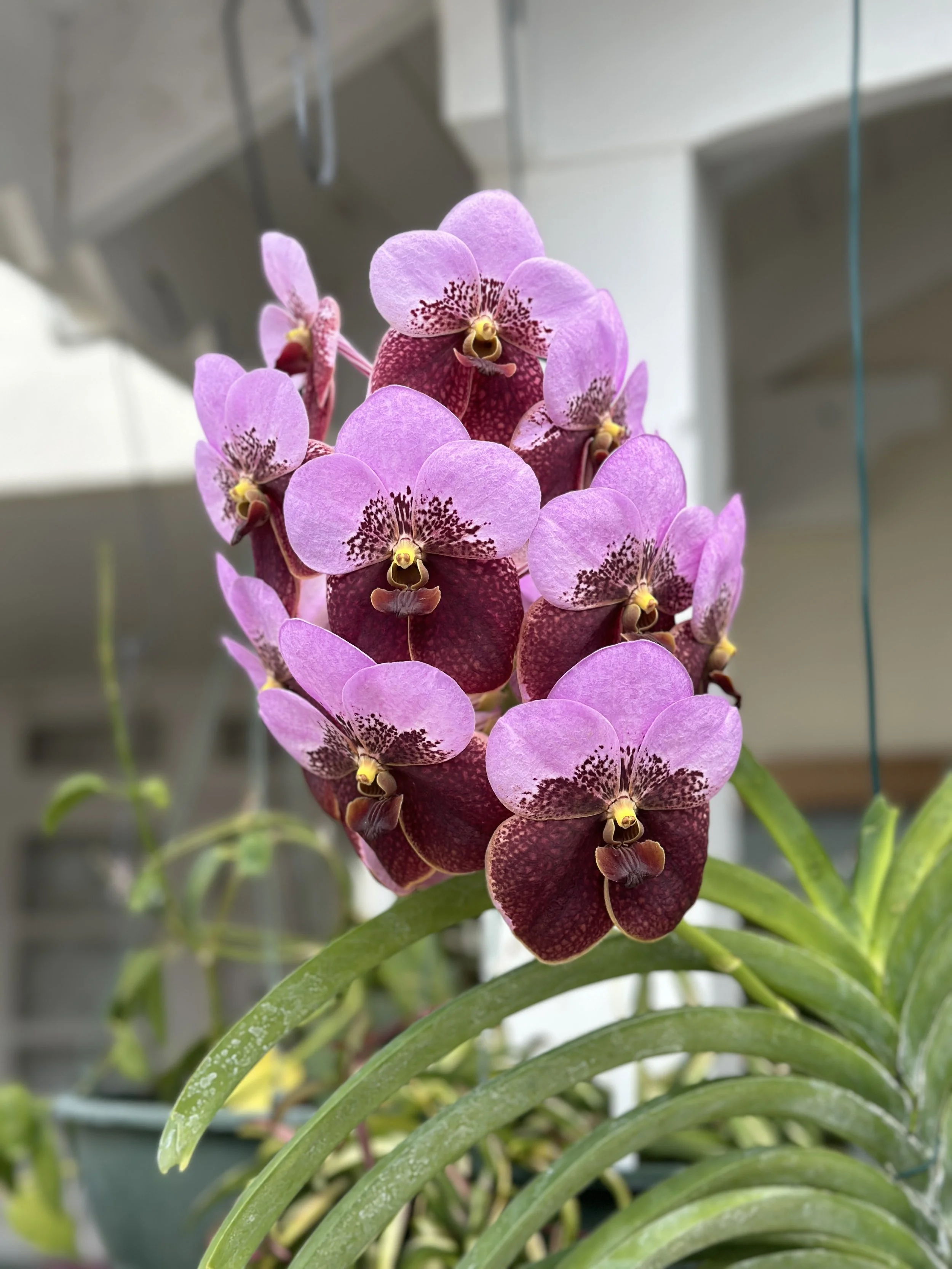
Vandas require more light than other orchids. No light, no blooms! However the amount of light is dependent on which type of Vanda you are growing. There are three types of vandas: strap-leaved, semi-terete and terete.
The first type has broader, flat leaves, while terete types have round, pencil-shaped leaves. The semi-teretes are hybrids between the two, with an intermediate leaf shape. Terete types need full sun, and are best grown in high-light climates like ours in Barbados. In your greenhouse, strapleaf vandas will flourish under 40%-60% shade cloth. Semiterete vandas leaves can be acclimated to full sun but will also bloom under dappled light.
The only “hangup" with vandas is how often they need to be watered. Other orchids have the ability to store water and nutrients in their pseudobulbs but vandas are grown with their roots exposed and no bulbs- therefore needing daily water and regular fertilizer.
Water by spraying your orchid’s roots with a fine mist. Water long enough to be sure that the roots change colour - this is how we know the plant is absorbing the water.
Water sparingly during cloudy weather and during the rainy season - always checking to see that the plant is well hydrated
These are the hungry hippos of the orchid world! Without consistent feeding and bright light vandas will be stingy with their blooms! Feed them weekly with a balanced NPK fertilizer such as 20-20-20.
One week of the month switch that out for a “bloom booster” i.e. any fertilizer where the middle number is highest - such as 10-30-10. Here, the 30 represents the amount of phosphorus in the nitrogen-phosphorous-potassium ratio. It is responsible for the development of blooms and fruits on plants.
In the hot summer days when plants go through water and nutrients more quickly, vandas also do very well with a 15-5-15 fertilizer which carries other important macro nutrients such as calcium and magnesium - which are very necessary during hotter months.
No matter what fertilizer you choose, be consistent and you will enjoy a healthy and robust plant,
set up for beautiful long-lasting blooms.
It is important to note that NO fertilizer can make an orchid bloom outside of its season. It is not a magic potion but rather a tool to aid in good growth. Understanding whether or not your plant is a species that blooms once a year or a hybrid capable of blooming 4 times a year is crucial to avoiding disappointment. Research your plant!
This is the easy part! Vandas do not need substrate and much rather grow without it. Simply hang it up in your shaded veranda or underneath a tree and marvel at its beauty! Many are sold in small four inch plastic baskets, solely for the purpose of hanging them.
It is imperative that you do NOT remove the orchid and its established root system from this basket as it will throw a fit and be very difficult to revive.
Many hobbyists wonder why flower buds blast on vandas and the answer is often thrips!
Vanda flowers are just as attractive to thrips as they are to us. Thrips are very difficult to see with the naked eye but the damage is very obvious. On flowers, petals will have brown edges making for an unsightly display. Buds will have a scorched appearance after these sap-sucking creatures have had their fill.
Be sure to treat monthly with a systemic insecticide throughout the year and more frequently during the warmer summer months when thrips are more active. Don’t get too comfortable with your “favourite” product. Rotating insecticides lowers the likelihood of any insects building a resistance - rendering your efforts futile.
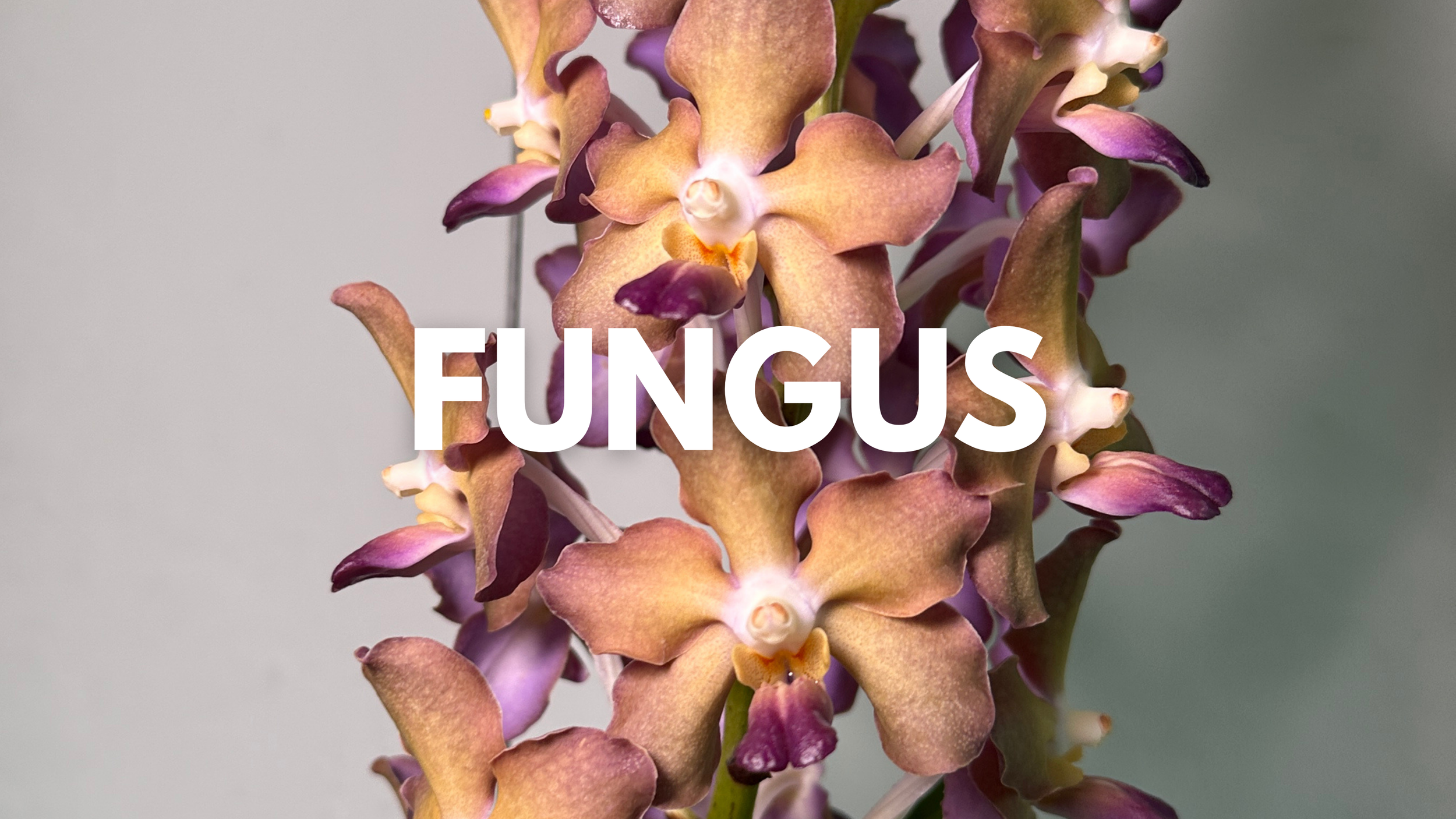
Vandas can suffer from many fungal issues!
Fusarium Wilt: A severe, often fatal fungus causing sudden leaf drop, where leaves turn yellow/brown at the base and fall off while still partially green. It causes the stem to develop a "palm tree" appearance and results in dry, calloused roots. A purple ring inside the stem cross-section is a classic symptom. There is no cure for fusarium and it is a very contagious and highly devastating fungus.
Cut until you no longer see the purple ring - making sure to sterilize between each cut. Dispose carefully of any infected plant material.