dendrobium orchids
Dendrobium Orchids - Diversity in Blooms
Dendrobium is one of the largest and most diverse orchid genera, with hundreds of species and hybrids. Found naturally from tropical forests to mountain regions, these epiphytic orchids have adapted to a wide range of environments, making them incredibly versatile growers.
Dendrobiums thrive in warm, humid climates like ours. In places like Barbados, Trinidad & Tobago & Jamaica, they grow vigorously and bloom generously with minimal fuss. With proper light and airflow, they’re some of the most reliable orchids you can grow.
Why grow dendrobiums?
They bring bold colour, elegance and tropical character to any space. From compact plants to tall, striking canes, there’s a type for everyone. Best of all, they’re relatively low maintenance and highly rewarding.
Dendrobiums are forgiving, adaptable, and often bloom for weeks or even months. With a little care, they’ll reward you with stunning displays again and again.
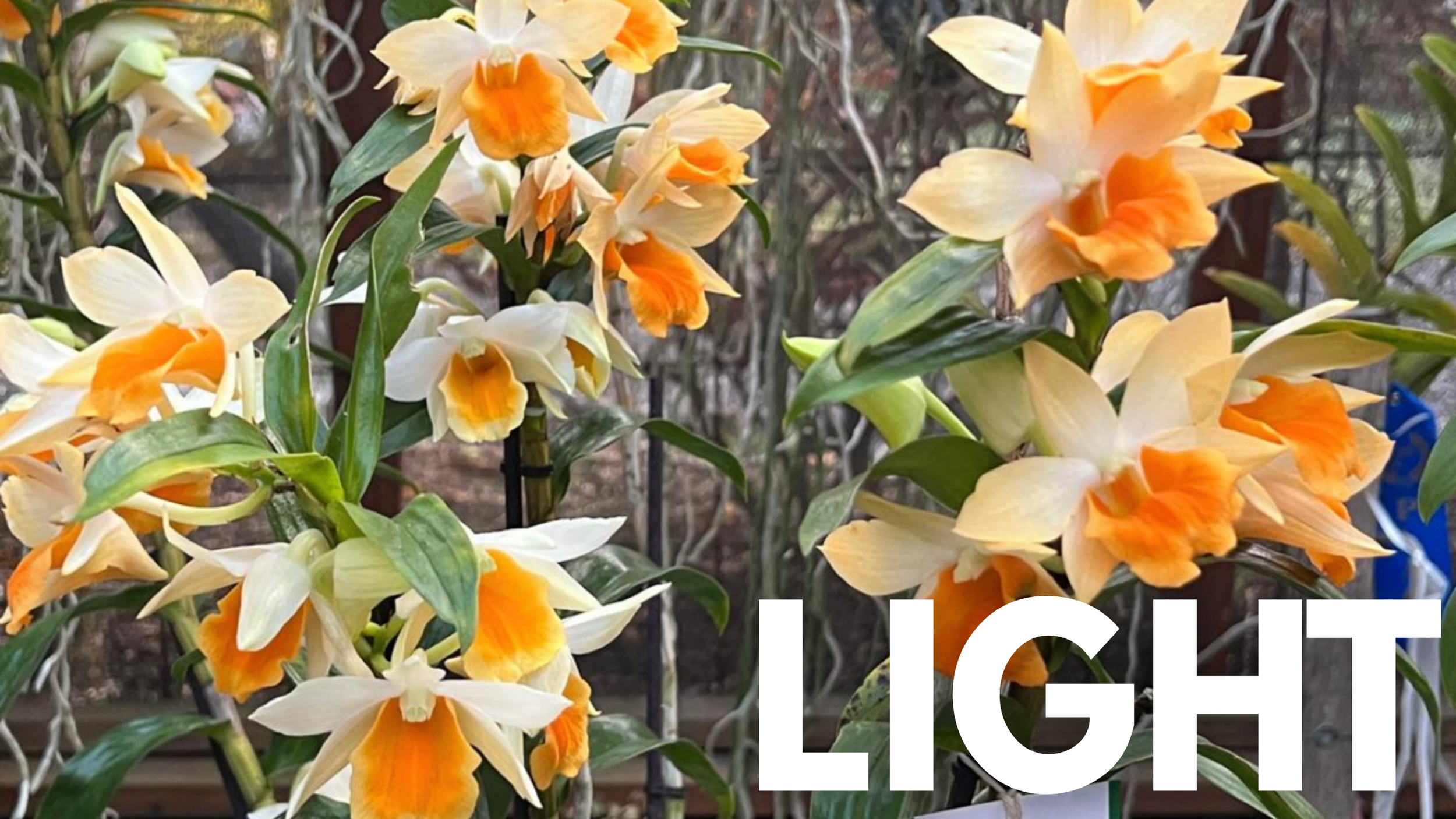
Light is the key to success. Dendrobiums need bright, strong light to grow and bloom well. Early morning and late afternoon sun is ideal, and many types can handle several hours of direct sunlight. Leaves should be light green; dark green usually means not enough light and poor blooming.
Many growers across the Caribbean have acclimated their dendrobiums to grow in full sun. Please note this is a process that requires time! If you put a dendrobium that you have recently purchased in full sun immediately, chances are it will scorch when exposed to such high levels of light.
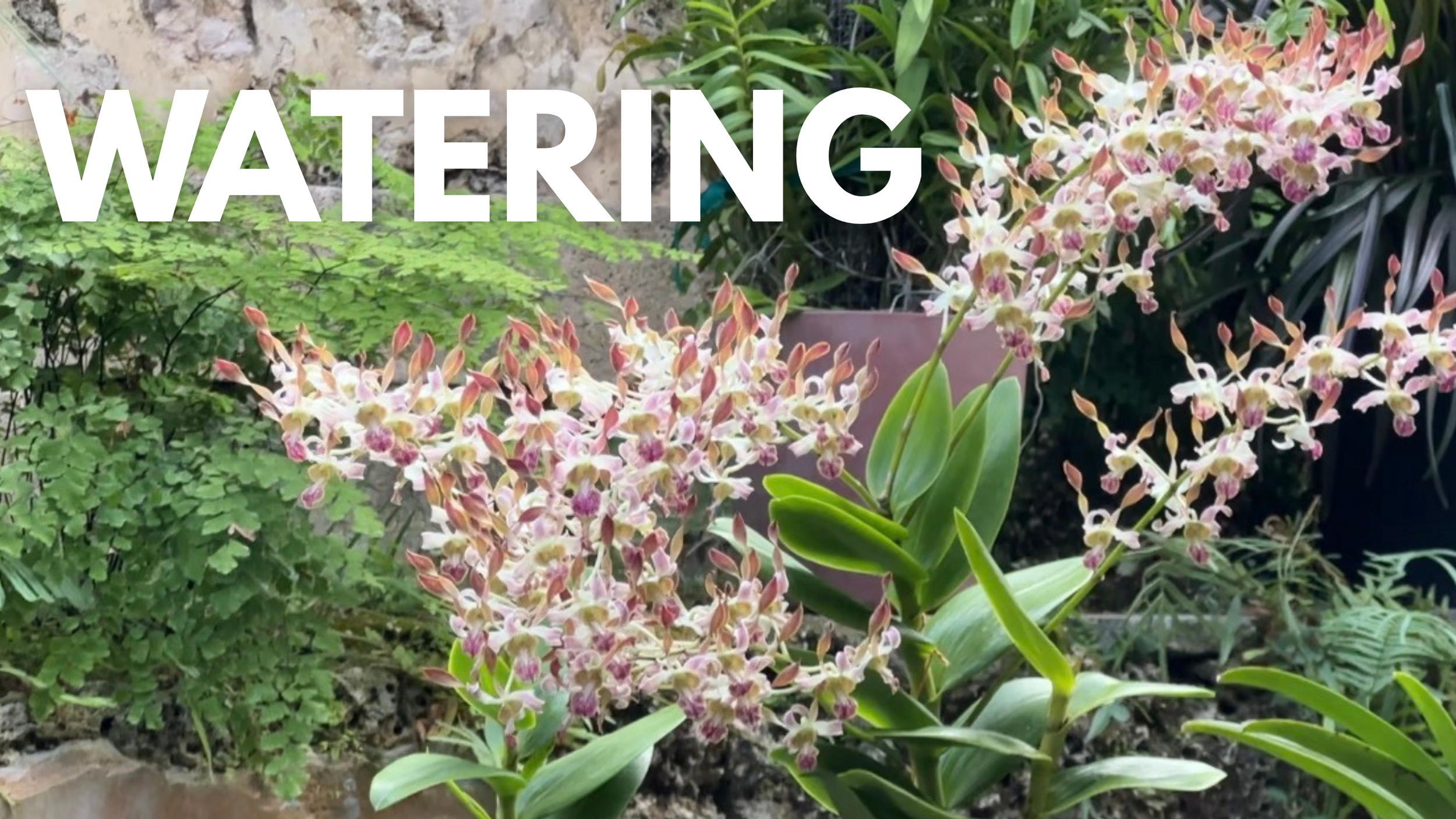
Water dendrobiums deeply and thoroughly, allowing water to run freely through the pot. In our warm and tropical conditions, this may be 2–4 times per week, while in cooler or rainy periods, less is needed.
Always check that the potting mix is dry before watering again. Dendrobiums prefer to dry slightly between waterings, but should not stay dry for extended periods during active growth. Try your best to water in the morning so plants dry by evening, reducing the risk of rot and fungal issues.
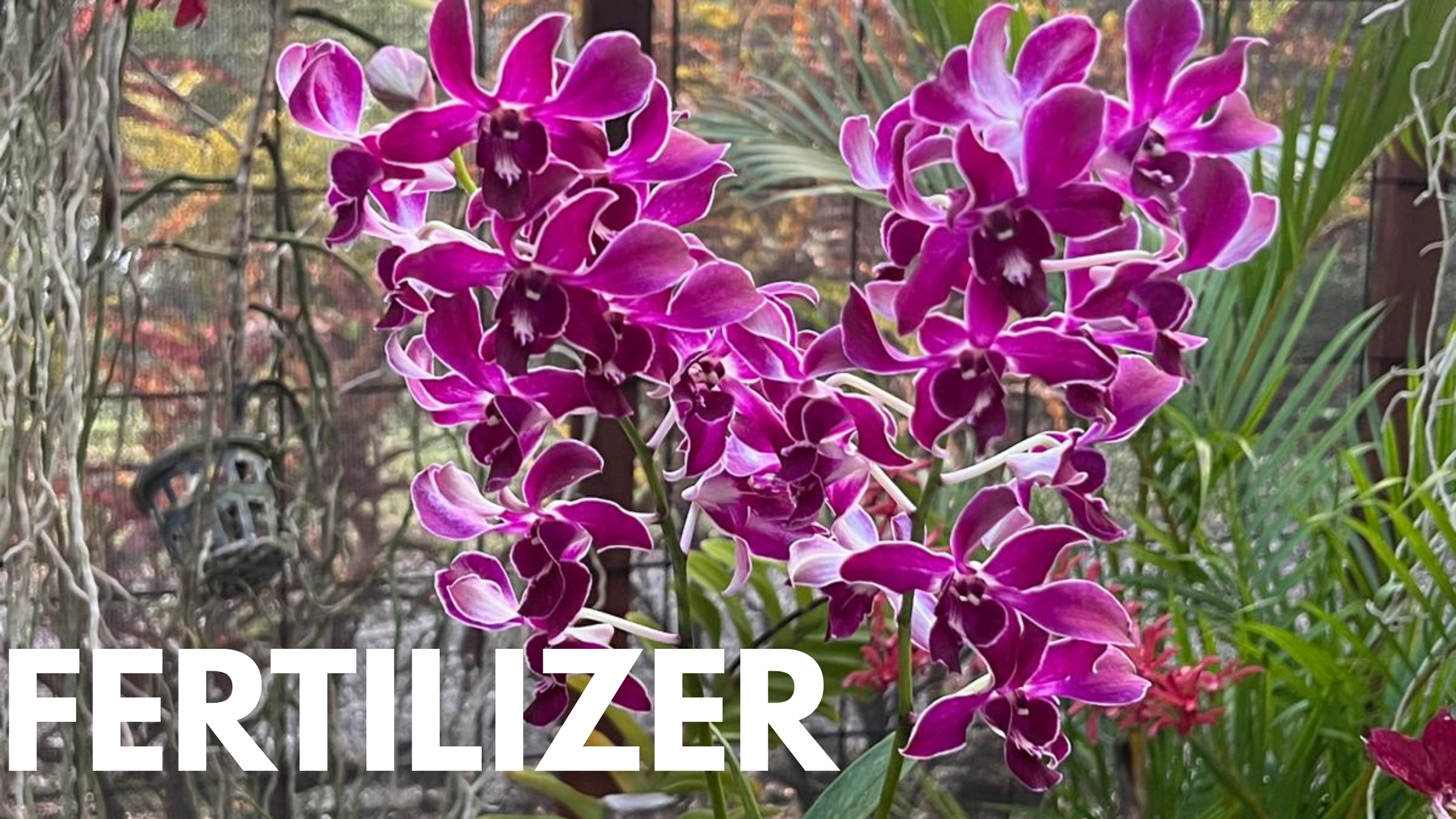
Feed lightly but consistently during active growth of these orchids. Like most orchids they enjoy feedings weekly weakly: Fertilizer once a week at a half of the strength the package recommends.
Fertilizing depends on what your Dendrobium need, for example :-
If your Dendrobium is in growing phase you may need fertilizer with high nitrogen low in phosphorus and high potassium like (15- 5-15 ).
You can alternate with ( 20-20-20 ) which is a balanced fertilizer.
When your Dendrobium is at the blooming stage you can apply ( 10-30-20 ) in which the nitrogen is lower and phosphorus is higher, also potassium. It is important to pay attention to the numbers in the fertilizer.
Supertrive is a vitamin that you can apply a few drops to some mixes.
Flush the pot monthly to prevent salt buildup by watering and letting the water run off.
Blooming
Immature growths, nutrient imbalance, or stress during bud formation can abort flowers. To encourage blooms, provide strong light, consistent feeding, and stable care. Healthy, mature canes are key—never cut them back, as many dendrobiums rebloom from old canes.
It is important to note that NO fertilizer can make an orchid bloom outside of its season.
It is not a magic potion but rather a tool to aid in good growth. Understanding whether or not your plant is a species that blooms once a year or a hybrid capable of blooming 4 times a year is crucial to avoiding disappointment. Research your plant!
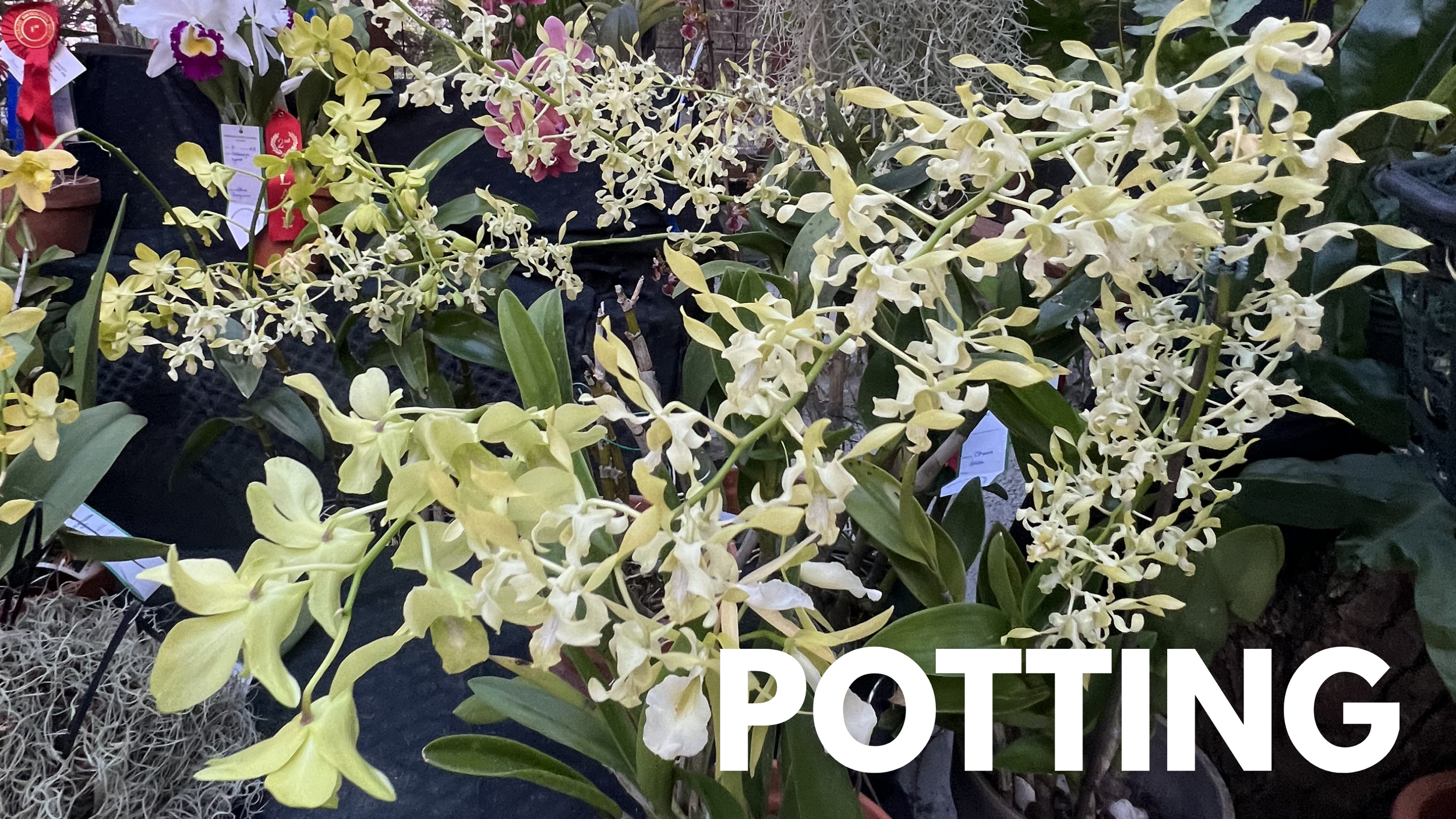
Use a fast-draining, airy mix to mimic their natural growing conditions. Coarse orchid bark is ideal as a base, especially for larger plants.
Additives like charcoal help keep the mix fresh, while perlite or leca clay balls improve drainage and prevent compaction. Avoid dense or water-retentive media like moss, as dendrobium roots need plenty of air.
Repot every 1–2 years, or when the mix breaks down or roots significantly outgrow the pot. The best time is when new roots are just starting to form, as the plant will establish quickly.
Remove old media, trim dead or rotting roots, and repot into fresh mix. Choose a pot that just fits the root system—dendrobiums prefer to be slightly snug. After repotting, water lightly and allow the plant to settle before resuming normal care.
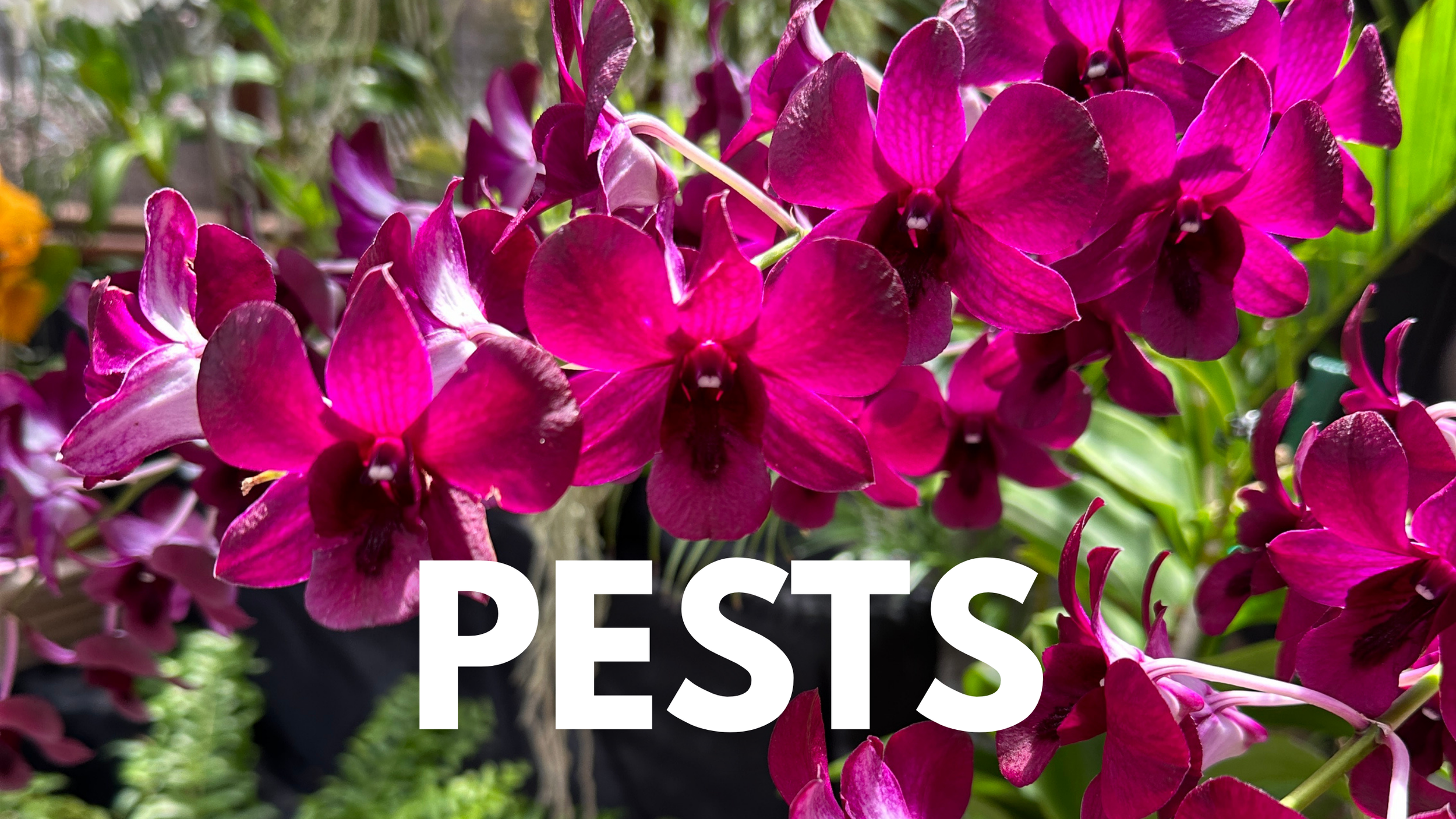
Warm climates make dendrobiums more prone to pests, so regular inspection is key:
• Thrips: Tiny, fast-moving insects that damage flowers and buds. In Barbados thrips are one of the most challenging pests for Dendrobium growers.Thrips cause damage to Dendrobium flowers and petals - discoloration, stunted growth, deformed flowers and bud drop can occur.
It is also important to always monitor Dendrobium, thrips reproduce quickly in soil and potting media and can develop resistance to insecticides, if the same product is used to spray Dendrobium repeatedly.
• Spider mites: Cause fine speckling or a silvery appearance on leaves, sometimes with fine webbing. Thrive in hot, dry conditions.
• Mealybugs & scale: Sap-sucking pests found on leaves, roots and cane joints. They weaken plants and leave sticky residue.
Control: Isolate affected plants, remove visible pests, and treat with insecticidal soap, horticultural oil or appropriate insecticides. Repeat treatments every 1–2 weeks and rotate products to prevent resistance.
Fungal and bacterial problems usually develop in wet, stagnant conditions:
• Root rot: Caused by overwatering or broken-down media. Roots become brown, soft and non-functional.
• Leaf spot diseases: Appear as black or brown spots that may enlarge over time, especially in humid conditions with poor airflow.
• Crown or stem rot: Rapid rotting of the plant base, often fatal if not caught early.
Control: Remove affected areas with sterile tools and treat with a suitable fungicide (both contact and systemic if available).
Prevention is key: Keep plants well-spaced, ensure strong airflow, avoid water sitting on leaves, and always use clean tools and fresh potting media. Avoid copper-based fungicides on dendrobiums.